Caterpillar And CoreWeave Advance Physical AI
📌 Executive Summary & Key Takeaways
- Core Finding: Caterpillar and CoreWeave accelerate the learning loop for physical AI in heavy industries.
- Key Metric: Infrastructure compute scales to support real-time sensor processing and autonomous operations.
- Leadership Takeaway: Engineering directors must integrate high-performance cloud clusters to support edge robotics workloads.
⚡ Technical Architecture & Engineering Breakdown
According to technical reporting and primary documentation from the source dispatch, infrastructure partnerships are reshaping heavy machinery workflows.
Specifically, distributed compute fabrics process high-bandwidth sensor streams directly from autonomous construction fleets. Consequently, machine learning models process environmental data with minimal latency in remote field deployments.
Furthermore, enterprise architects deploy specialized clusters to handle heavy tensor operations required for robotic perception systems. Therefore, organizations reduce model training times while improving operational safety across remote job sites.
- ✅ Architecture: Distributed cloud-to-edge pipelines linking remote machinery to high-performance inference clusters.
- ✅ Performance Profile: Low-latency perception processing for heavy industrial automation systems.
- ✅ Operational Footprint: Hybrid GPU cloud infrastructure paired with ruggedized onboard hardware.
⚖️ Production Tradeoffs & Operational Limits
- Architectural Advantage: Rapid model iteration speeds up deployment cycles for autonomous heavy equipment.
- Architectural Advantage: Enhanced compute availability supports complex spatial reasoning models in real time.
- Production Limitation: High network bandwidth dependency can challenge remote or subterranean job sites.
- Production Limitation: Significant power consumption requires robust local generation capabilities on site.
🚀 Practical Implementation Guide
- Step 1 (Environment Setup): Initialize the telemetry processing pipeline using standard Python logging and request libraries.
- Step 2 (Execution & Configuration): Deploy the following configuration template to manage edge inference endpoints:
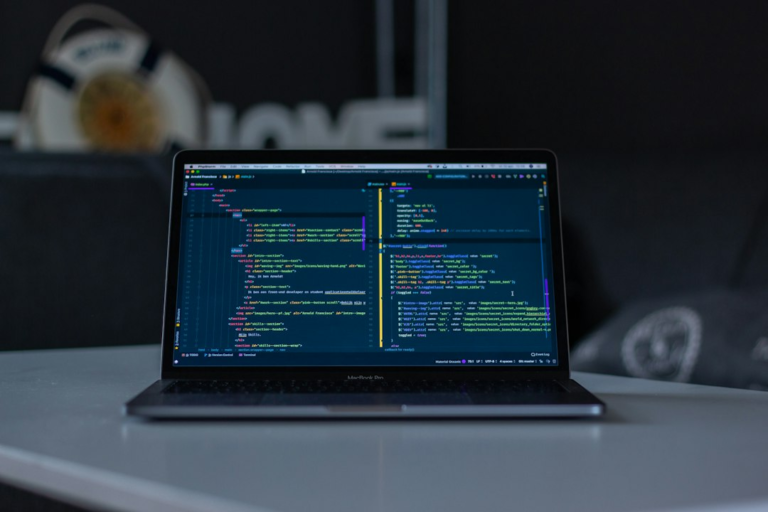
import json import logging import requests logging.basicConfig(level=logging.INFO) logger = logging.getLogger("PhysicalAIClient") class InferencePipeline: def __init__(self, endpoint_url: str): self.endpoint_url = endpoint_url def send_telemetry(self, telemetry_data: dict) -> bool: try: headers = {"Content-Type": "application/json"} response = requests.post( self.endpoint_url, data=json.dumps(telemetry_data), headers=headers, timeout=5 } response.raise_for_status() logger.info("Telemetry successfully ingested by inference cluster.") return True except requests.exceptions.RequestException as e: logger.error(f"Inference ingestion failed: {e}") return False if __name__ == "__main__": client = InferencePipeline("https://api.internal-cluster.local/v1/telemetry") sample_payload = {"device_id": "cat_excavator_01", "status": "active"} client.send_telemetry(sample_payload) - Step 3 (Production Verification): Execute health checks against the telemetry ingest endpoint to verify connectivity.
❓ Quick Engineering FAQs
Q: How do physical AI pipelines handle intermittent network connectivity?
A: Specifically, edge controllers cache telemetry locally and synchronize with the core cloud cluster once connectivity restores.
Q: What infrastructure requirements are necessary for training heavy machinery models?
A: Additionally, organizations require high-memory GPU clusters to process multimodal sensor data efficiently.
Q: How can engineering teams debug synchronization failures in distributed clusters?
A: Consequently, developers utilize distributed tracing tools to monitor payload transmission across edge and cloud boundaries.
🎯 Clarezio Verdict
Final Decision: Enterprise architects must establish robust cloud-to-edge pipelines to successfully scale physical AI deployments across industrial operations.